
Overview
Whiteboards is a collaboration tool designed for agile teams to enhance their collaborative work. The tool was available as a plugin for Jira and Confluence, meant to facilitate planning meetings, retrospectives, and daily stand-ups. However, it was ultimately shut down after Atlassian launched their native whiteboarding solution.
My contribution
As the first designer in a growing team, I played a key role in shaping the product’s features and strategy. By conducting user interviews and collaborating closely with product and engineering teams, I ensured a user-centered approach throughout the development process.
The team
I was part of a team that grew to over 25 people, distributed across two product teams focusing on whiteboard features and Agile use cases.
Year
2021 – 2023
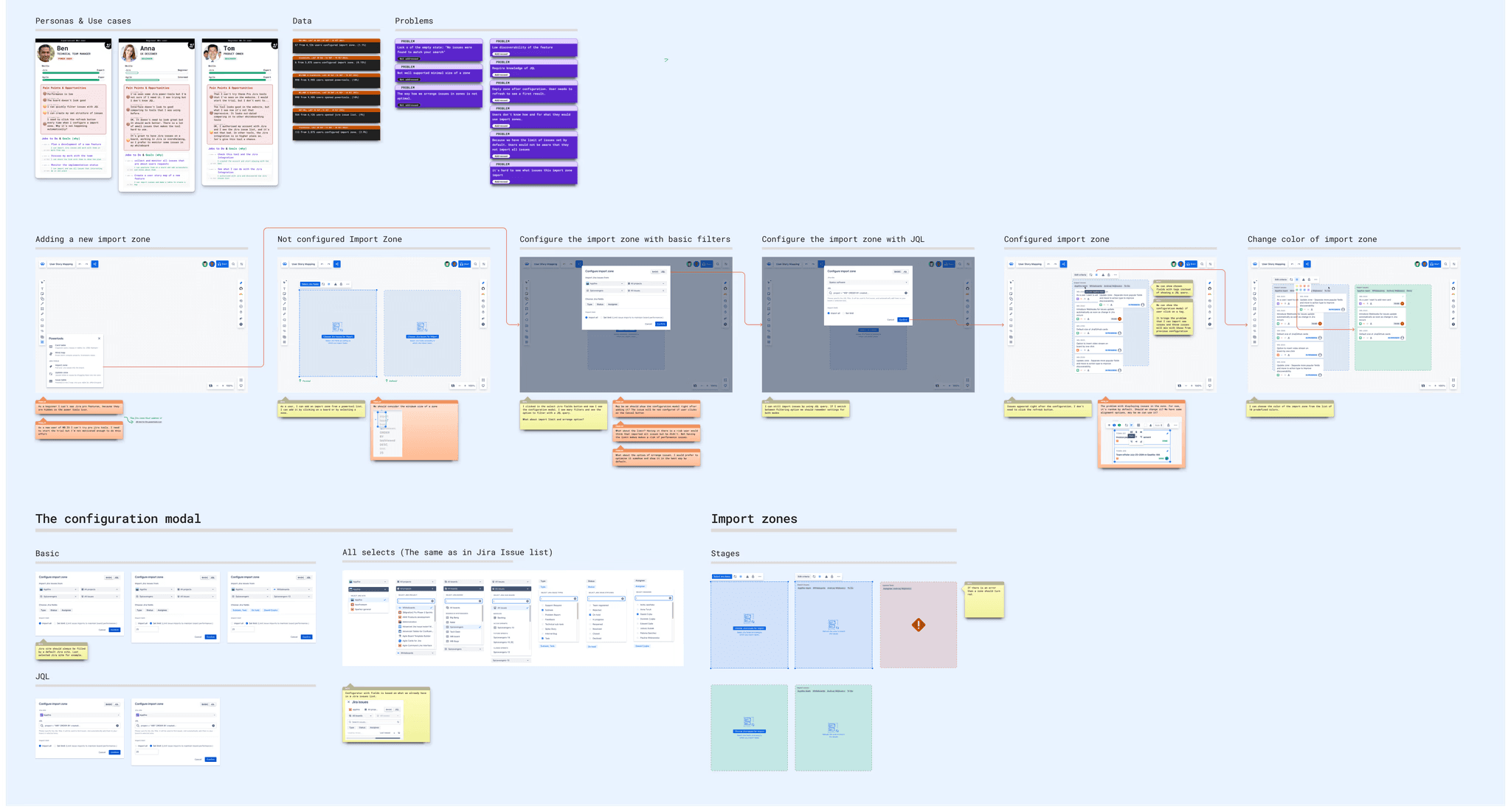
Process
The sign up process improvements
Why do we want to do this?
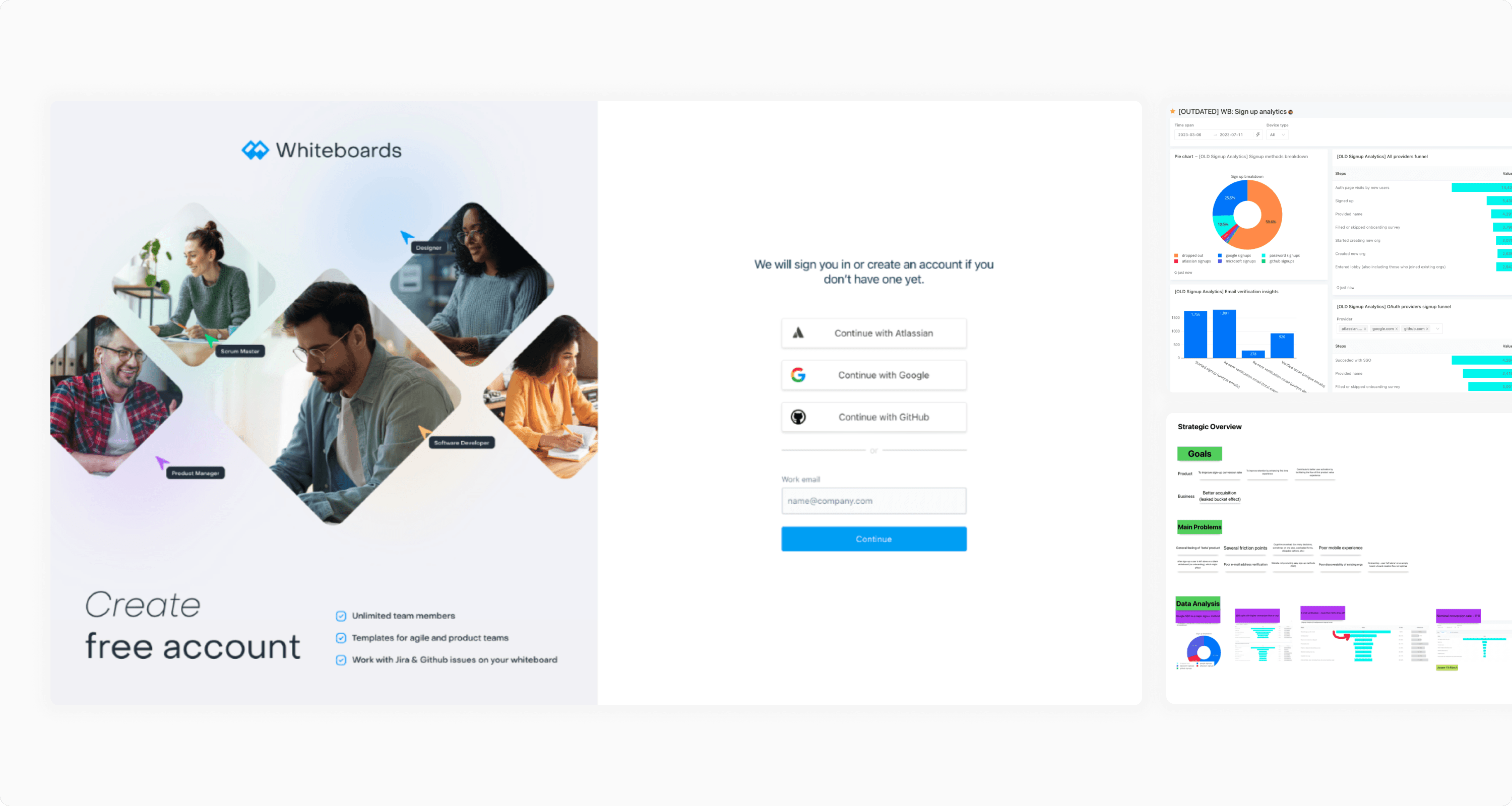
We were planning a marketing campaign to drive more traffic to the product, but with a low sign-up conversion rate of just 20%, we knew it wouldn’t be effective without first improving the user journey. We identified several issues causing drop-offs: the process wasn’t straightforward, it wasn’t mobile-friendly, there were unnecessary steps, unclear copy, and an outdated, unengaging UI.
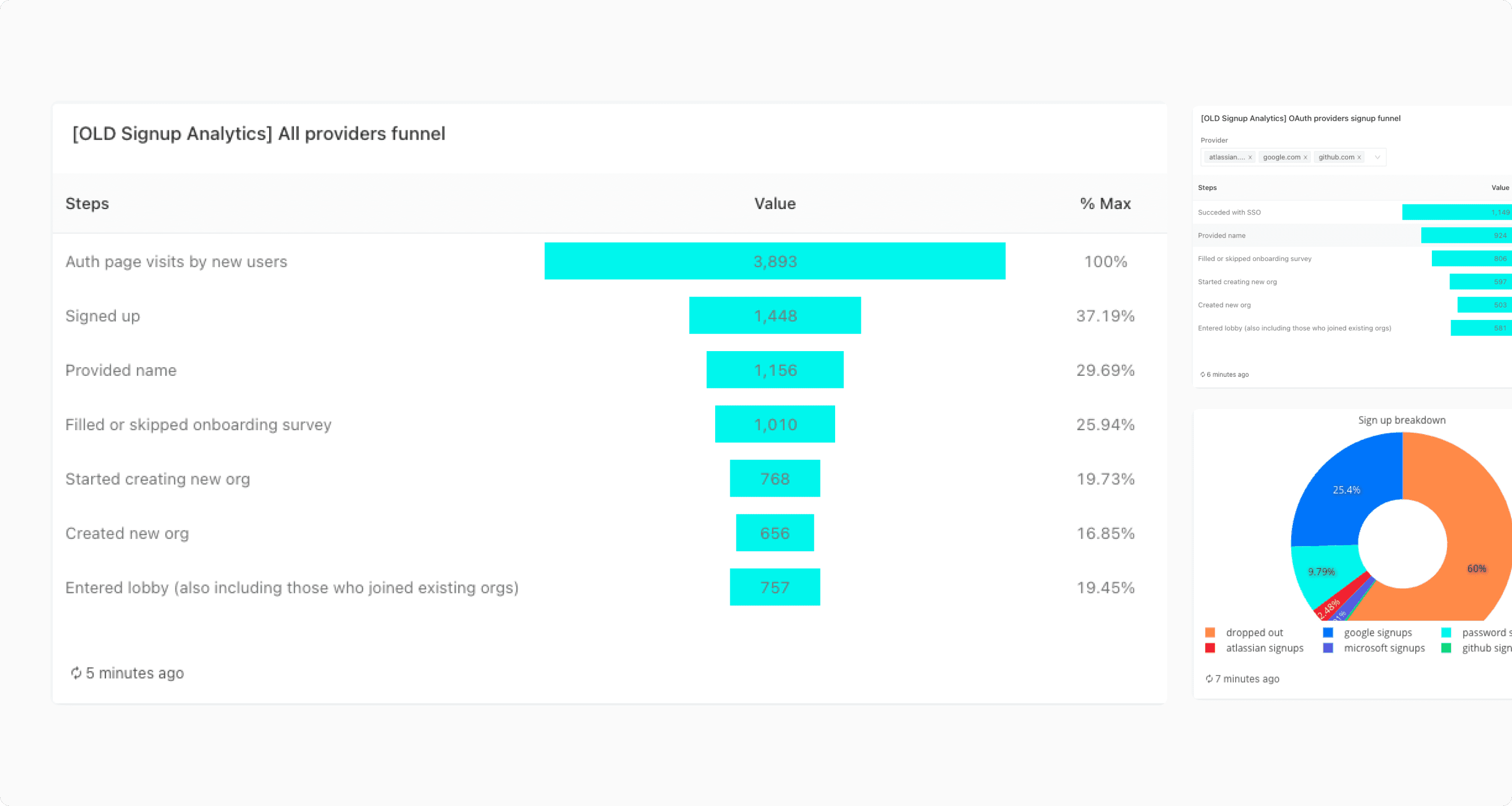
Funnel Analysis of the old flow
During the analysis, we found that almost 60% of users dropped off at the first step. We also saw a 20% higher conversion rate with SSO authentication, with Google SSO being the most popular at 63%. Only 40% of users successfully verified their email.
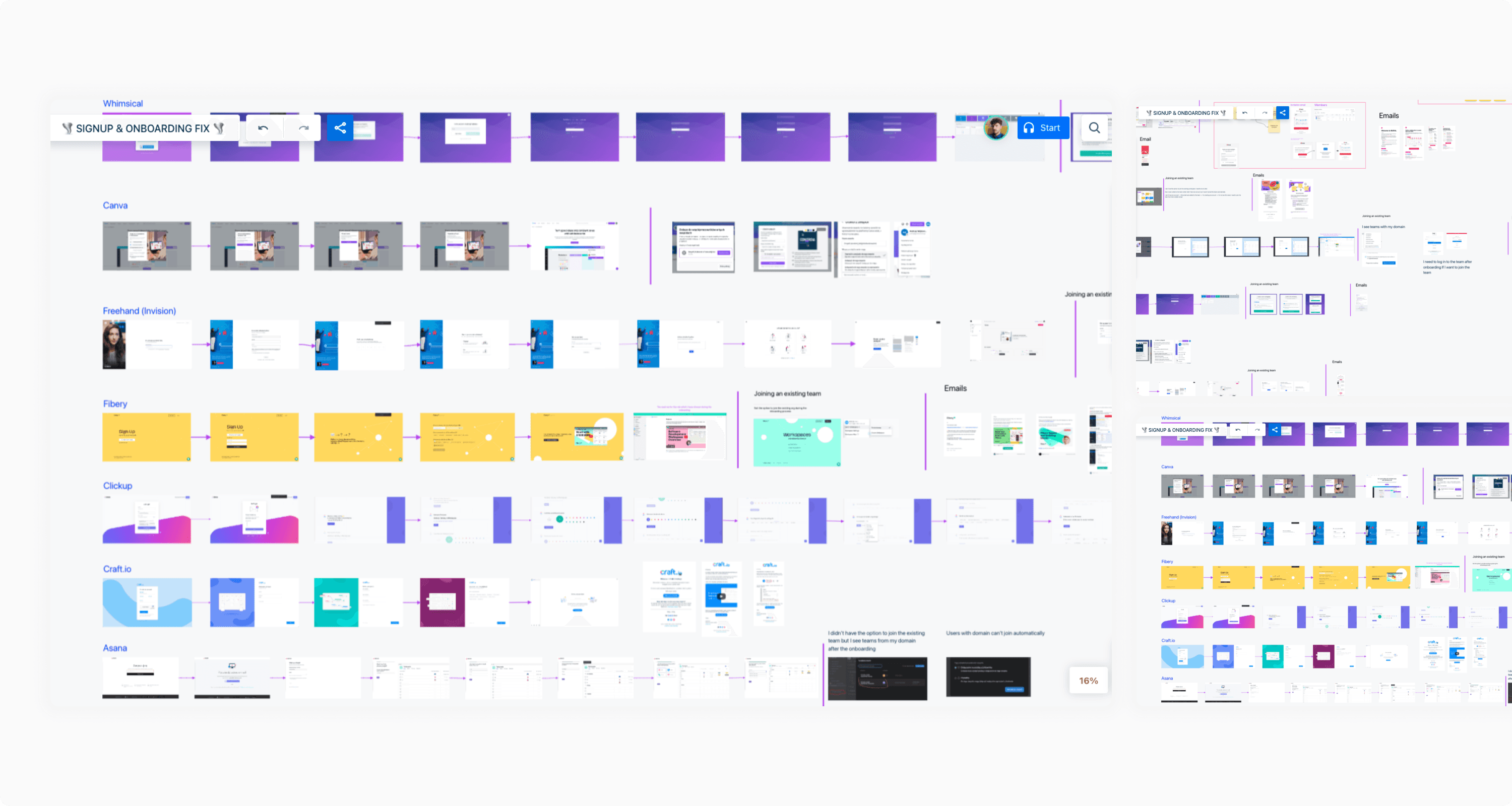
Competitors analysis
We didn’t want to reinvent the wheel, so we looked into best practices for the sign-up process. We found a few ideas to improve it: keep only one decision per step to make it more straightforward, highlight Google SSO with simple UI tweaks, add social proof, and use design tricks to make the process feel shorter.
Tailoring the process
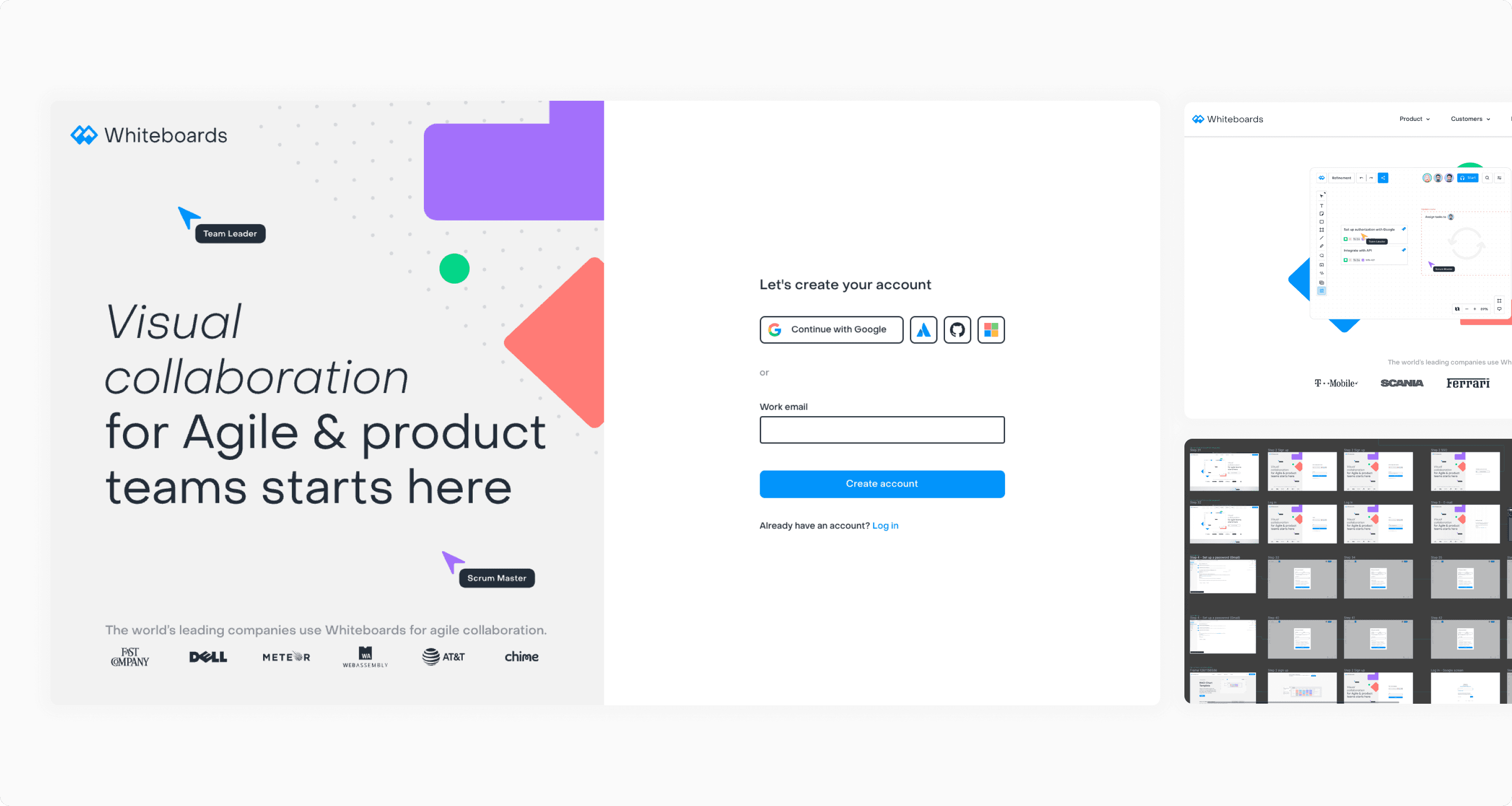
At this point, we focused on what information we really needed to collect—and what we could remove to shorten the process. We decided to increase visibility of Google SSO, switch to email verification with a code, ask only about the user’s role (not their use case), remove the step to invite teammates, and end the flow on the board with the template library visible.
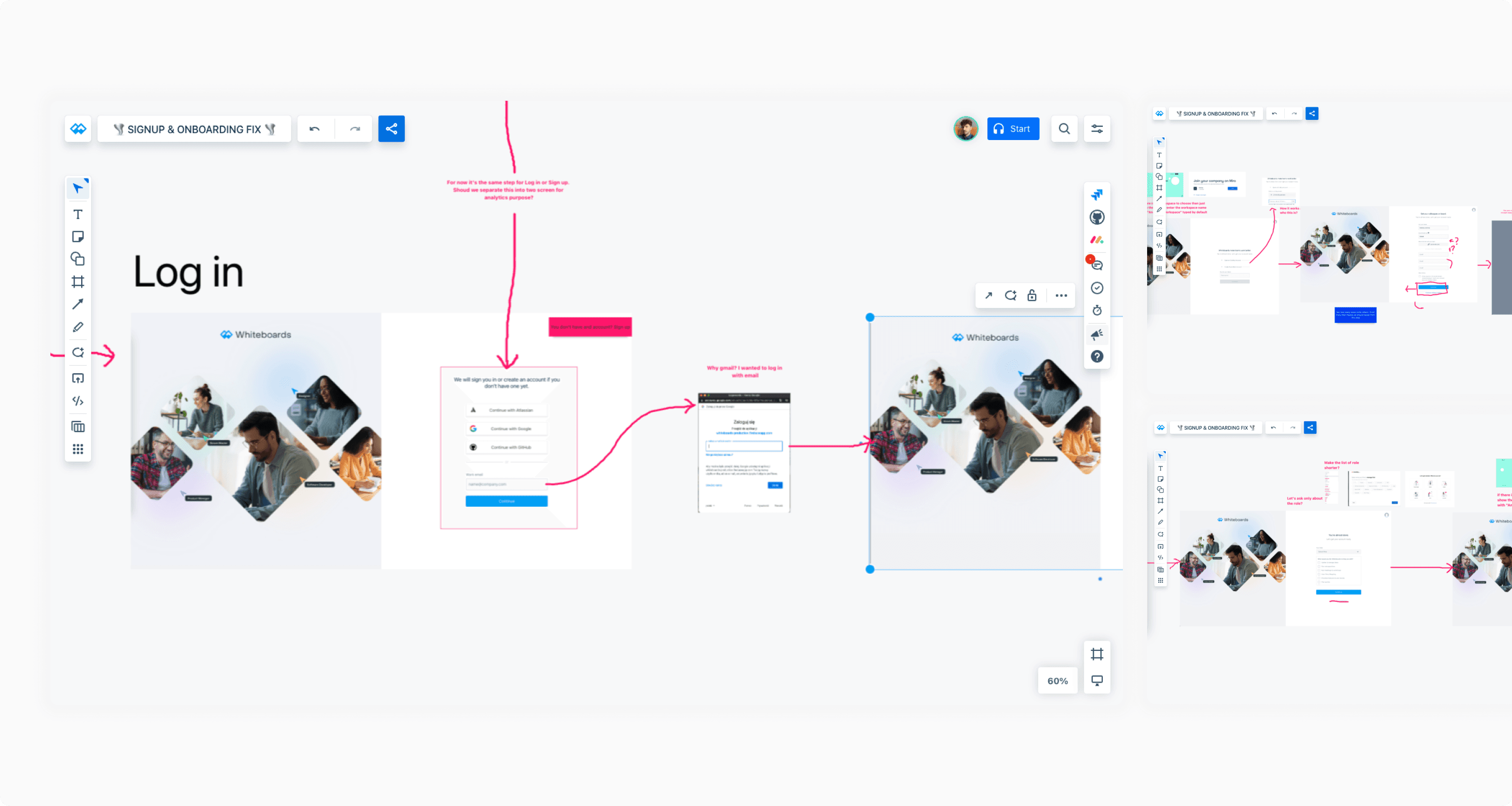
Working on UI
At this stage, we started designing the UI for the new sign-up process and explored all possible user paths. We discussed them with the team and began planning how to break the project into smaller parts.
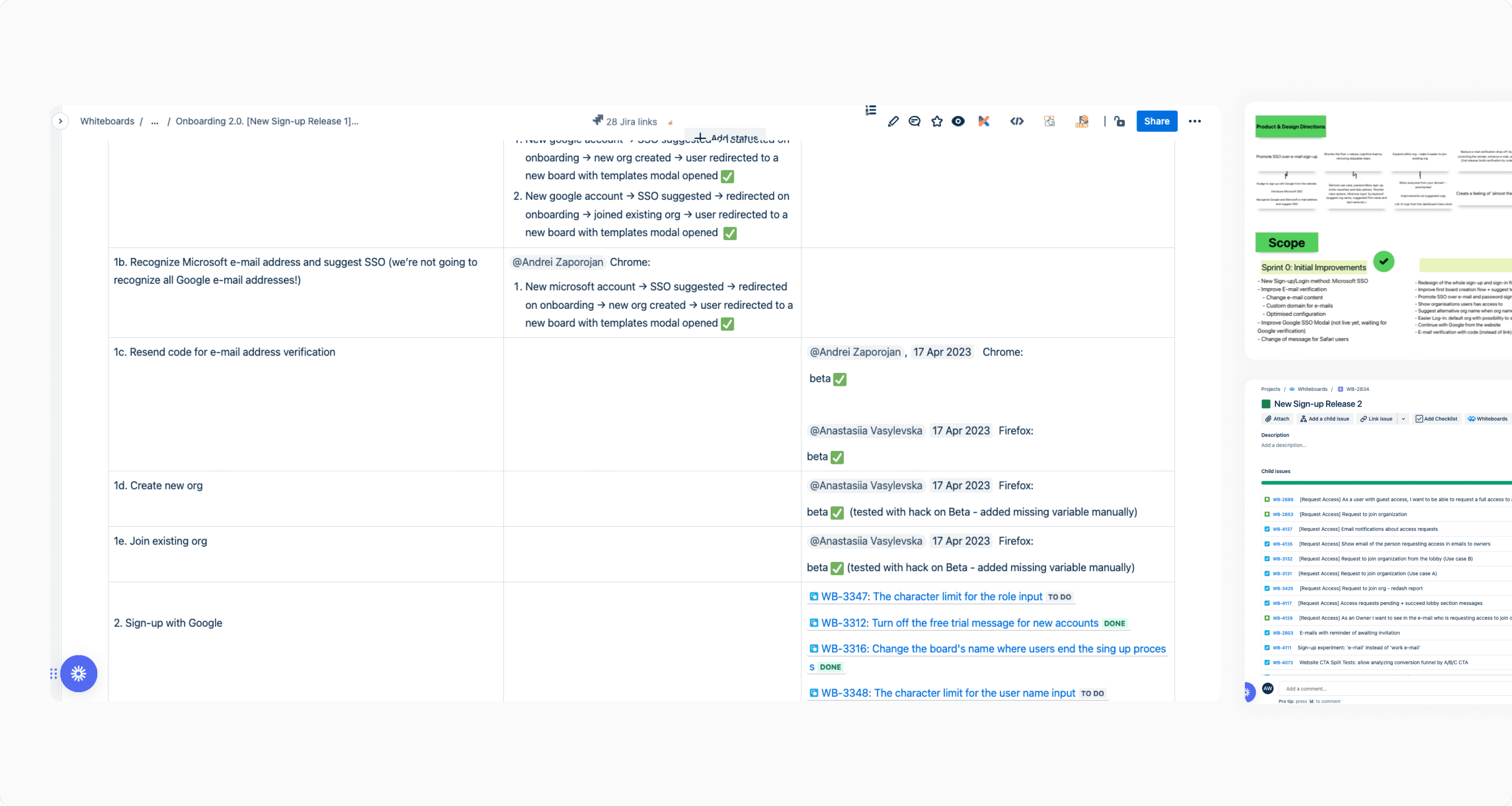
Scoping, handoff and testing
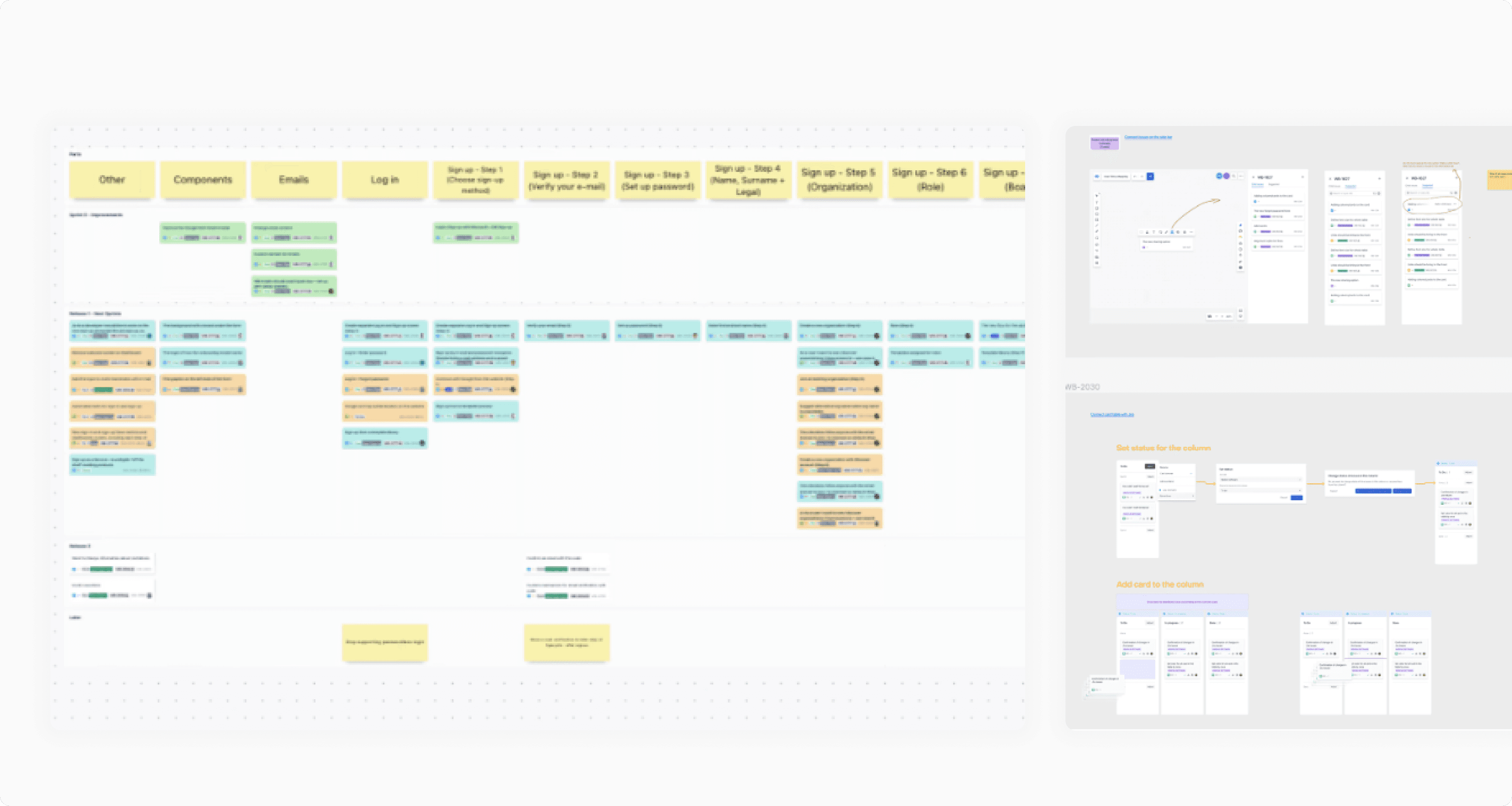
Once the design was ready, we brainstormed with the team on how to implement it efficiently. We created the epic, refined and estimated tasks, and handed off specific elements for development. My main role during the implementation was testing.
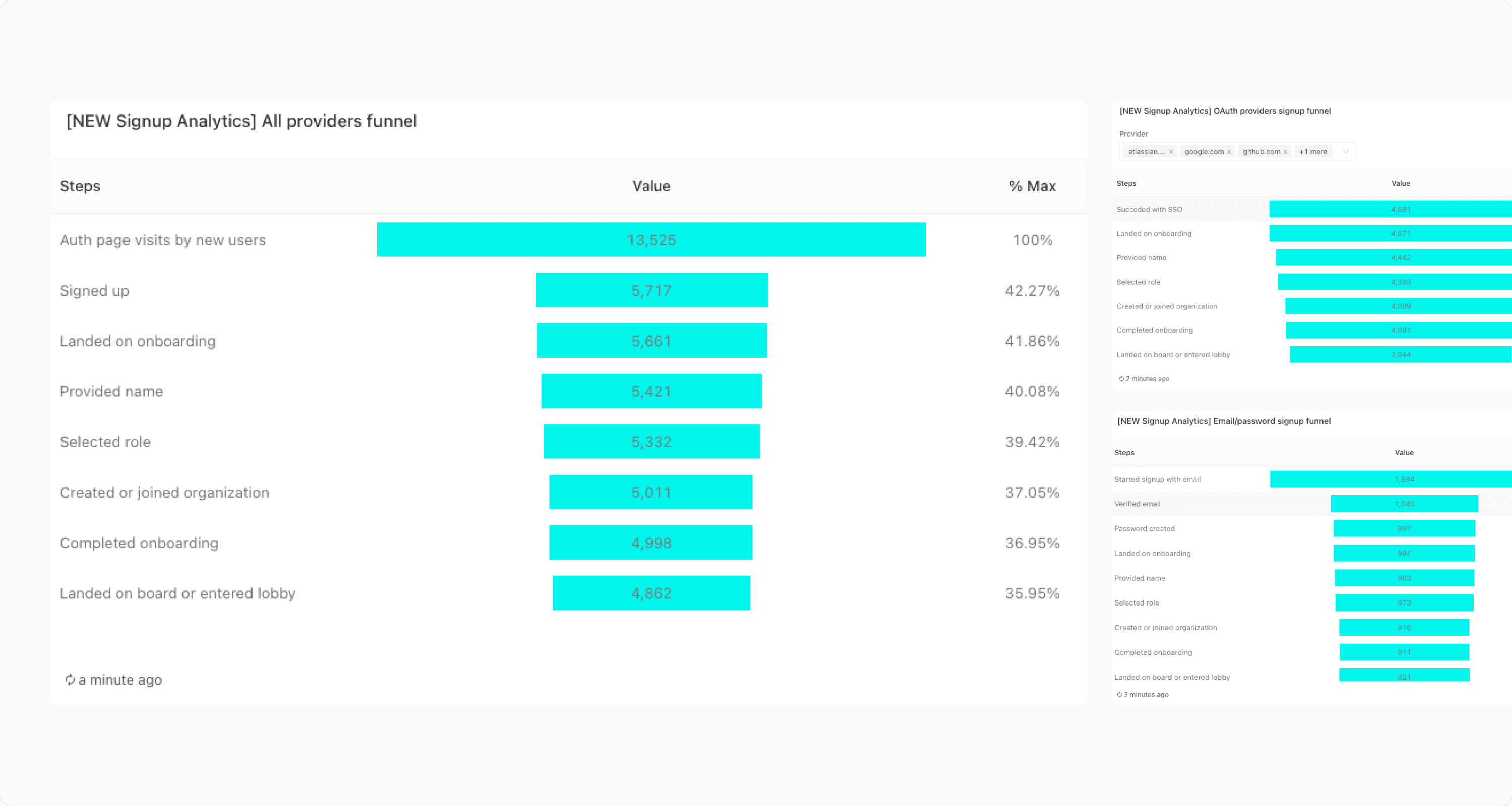
Release of the new sign up
After covering all user paths and testing the full scope, we released the new sign-up flow and used a prepared analytics dashboard to monitor the results. The conversion rate increased from 19% to 36.5%. Everything looked good, except for one major drop-off we need to investigate. We also saw more users choosing Google SSO and higher conversion at every step.
The new board's library
About the project
The initiative is about improving the list of boards that users have created within the organisation. We decided to redesign the existing solution based on feedback we received from our users, as well as our OKRs at the time, which focused on increasing the average number of boards per organisation and the percentage of organisations with more than one user.
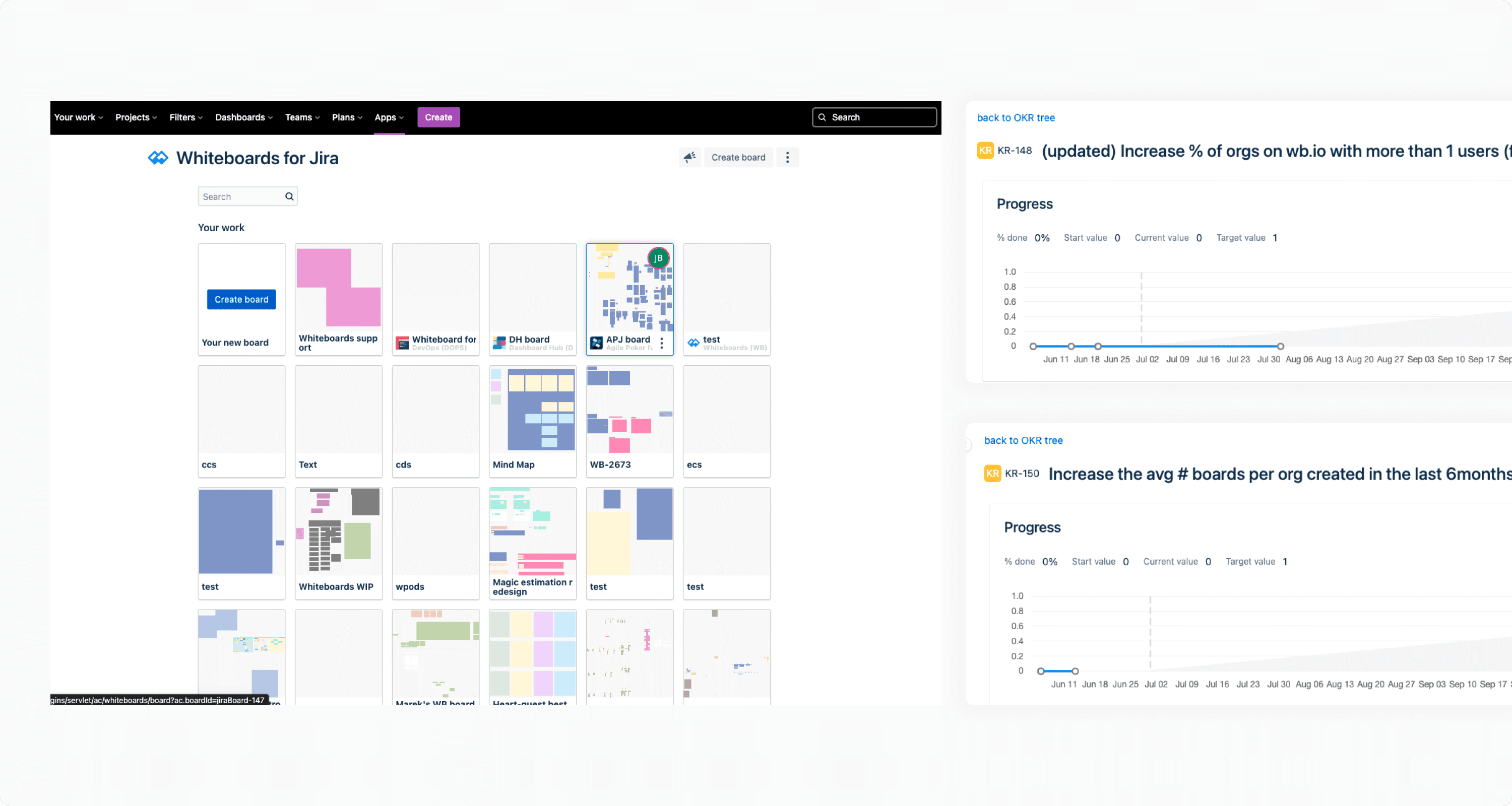
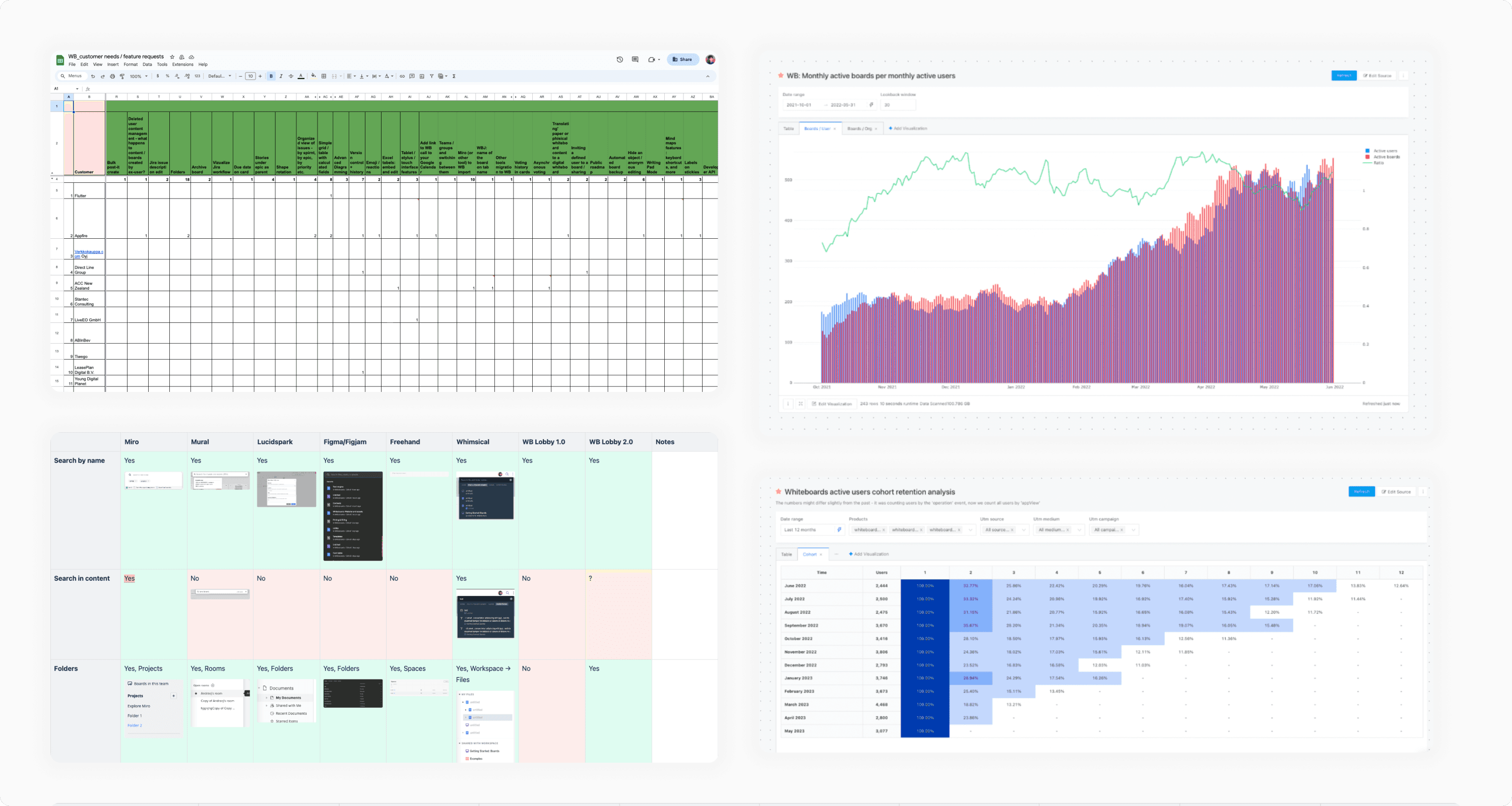
Discovery
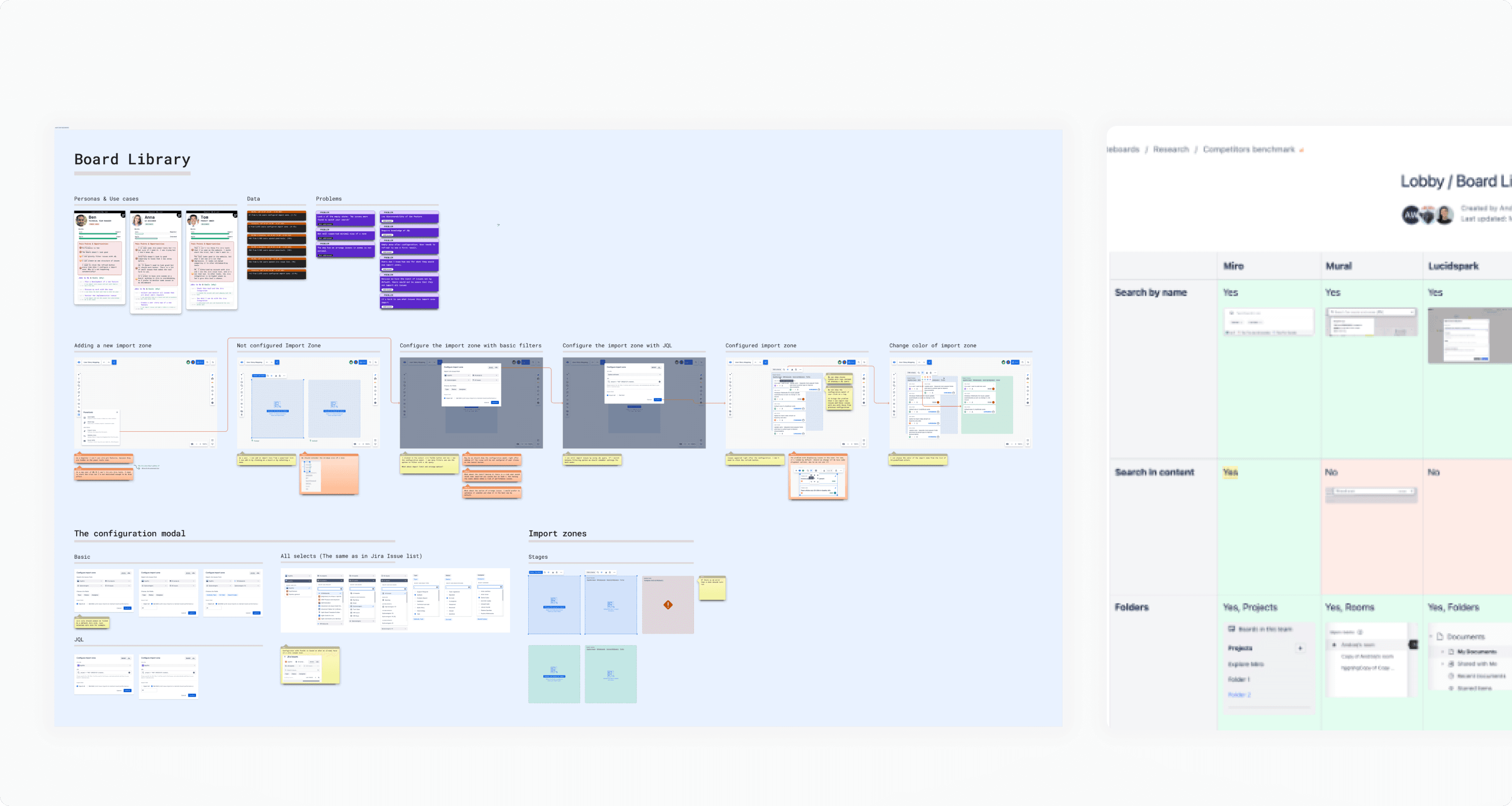
We analysed a qualitative and quantitate, and we knew that we have a lot of problems and ideas suggested by our users for example: Problem with finding the exact board, organising boards or working on many boards at once.
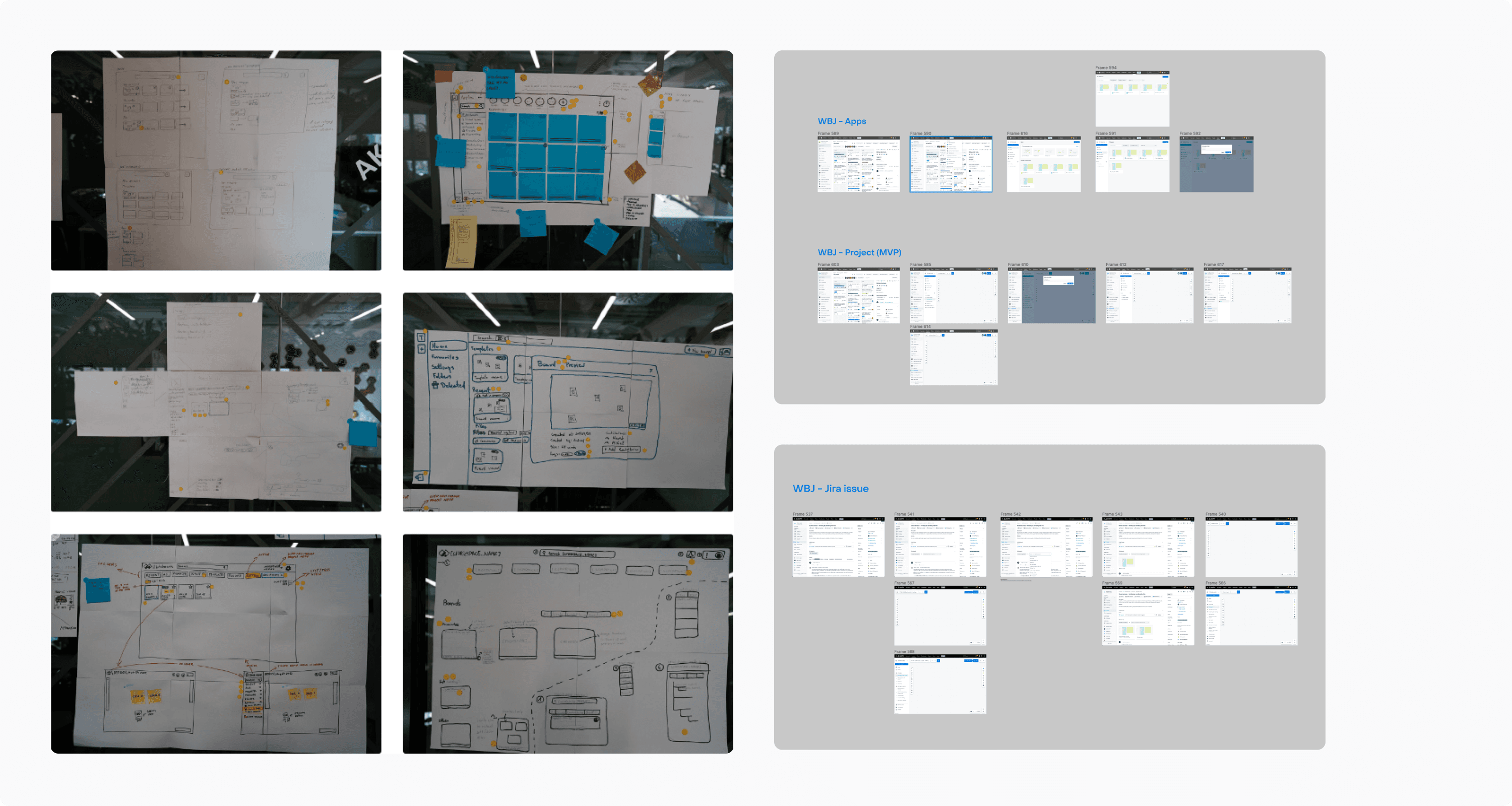
Design
We started with drafts of different solutions and tried to validate them with our existing users who had previously reported the issue with the list. We also had several rounds of discussion with the team about the solution and the scope of what we could realistically deliver.
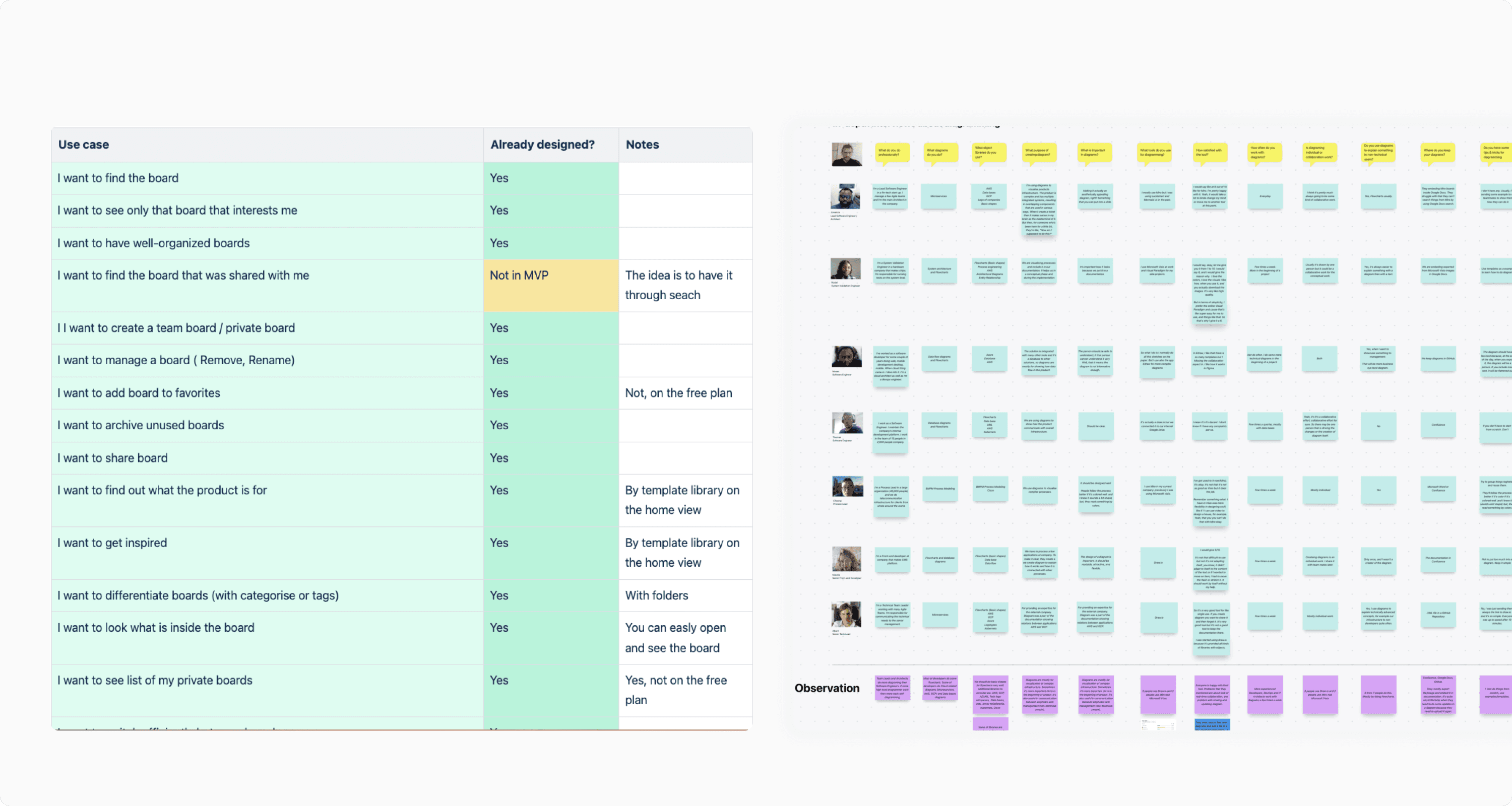
Usability tests
After we decided on a solution, I created an interactive prototype to test with our users. We conducted a few usability tests combined with in-depth interviews, which helped us understand the problems they were facing and whether our new solution addressed them. The interviews gave us many insights that helped us finalize the scope and the design.
Design
We started with drafts of different solutions and tried to validate them with our existing users who had previously reported the issue with the list. We also had several rounds of discussion with the team about the solution and the scope of what we could realistically deliver.
Implementation
During implementation, I supported developers by clarifying edge cases and ensuring the solution matched the Figma designs. Before release, we tested the feature internally through dogfooding to catch any issues early. After that, we rolled it out to users
Outcome
Whiteboards is a collaboration tool designed for agile teams to enhance their collaborative work. The tool was available as a plugin for Jira and Confluence, meant to facilitate planning meetings, retrospectives, and daily stand-ups. However, it was ultimately shut down after Atlassian launched their native whiteboarding solution in November 2023.